This feature is part of our series called Rooted & Rising. This storytelling campaign is centered on celebrating the unique heritage, lived experiences, and paths that have shaped leaders around the CCS, recognizing that our conference is strengthened by individuals who come from different backgrounds, communities, and walks of life.
For some, coaching is a career path carefully mapped out. For others, it begins with a quiet realization that the game may change — but the calling never does.
For Christian Buckmire, the Assistant Women’s Basketball Coach at Piedmont University, the journey into college athletics didn’t begin on the sideline. It began as a student-athlete chasing one more opportunity.
“My coaching journey started in undergrad at then Piedmont College after a couple of years of trying to be a walk-on,” he recalls. After stops at East Georgia State College and later Piedmont, the reality set in that “my playing career was over,” he says. “But since my junior year of high school, I had it in my mind that I wanted to be a basketball coach.”
Basketball was never just a sport — it was his passion. And walking away from it completely was never an option.
He changed majors more than once — athletic training, exercise science, then finally interdisciplinary studies — searching for a path that would keep him close to the game. “In the back of my mind, I knew I wanted to coach,” he says. So, he did what future leaders do: he asked.
He approached then-head coach Greg Neeley, though the staff was already full. Then he went to Jamie Purdy — a conversation that would shift everything.
“She gave me the opportunity of a lifetime,” he says. “Now looking back, that was the start of our relationship.”
From 2015 to 2017, he served as an undergraduate assistant, planting the seeds for what would become a career built not just on knowledge of the game, but on relationships.
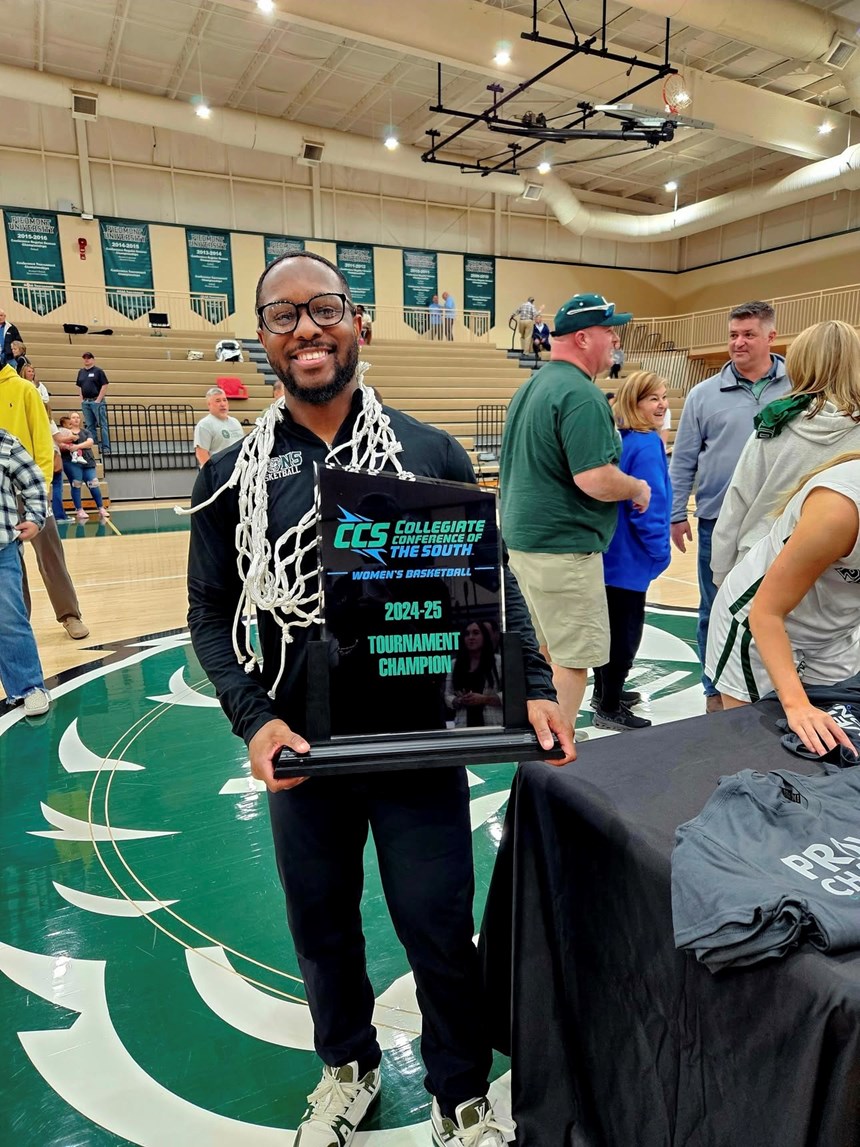
“Jamie Purdy gave me the start to my coaching career,” he says. “She gave me my first collegiate coaching opportunity. I learn something new from Coach Purdy every day — 21 years of wisdom and knowledge and gems that she doesn’t even know she drops.”
Before college, there was Jamal Basit — his AAU coach — who later gave him his first coaching opportunity at Dutchtown High School.
“He taught me the off-the-court duties of a young coach coming up the ranks,” he explains. “Scouting, recruiting, navigating parent conversations, schedule building, bus scheduling. He taught me that being a coach is way more than just X’s and O’s.”
Then there was Scott Bracco, his high school head coach and a state champion, whose lessons still echo years later: “Being present in the moment. Not taking that moment for granted. Giving the game your all because one day it will end.”
And at the center of it all is his father - Curt Buckmire.
“My father taught me how to lead by example. How to be a husband to one wife. How to be a God-fearing man. The value of hard work,” he says. “Everything I am today I owe to my father.”
At 32, he carries those lessons not as memories, but as daily practice.
As a Black professional in college athletics, he understands that presence is powerful.
“I think it’s important to have representation of African Americans in any profession that young men and women can look up to,” he says. But representation, to him, goes deeper than visibility.
It’s about relatability. It’s about accountability. It’s about truth.
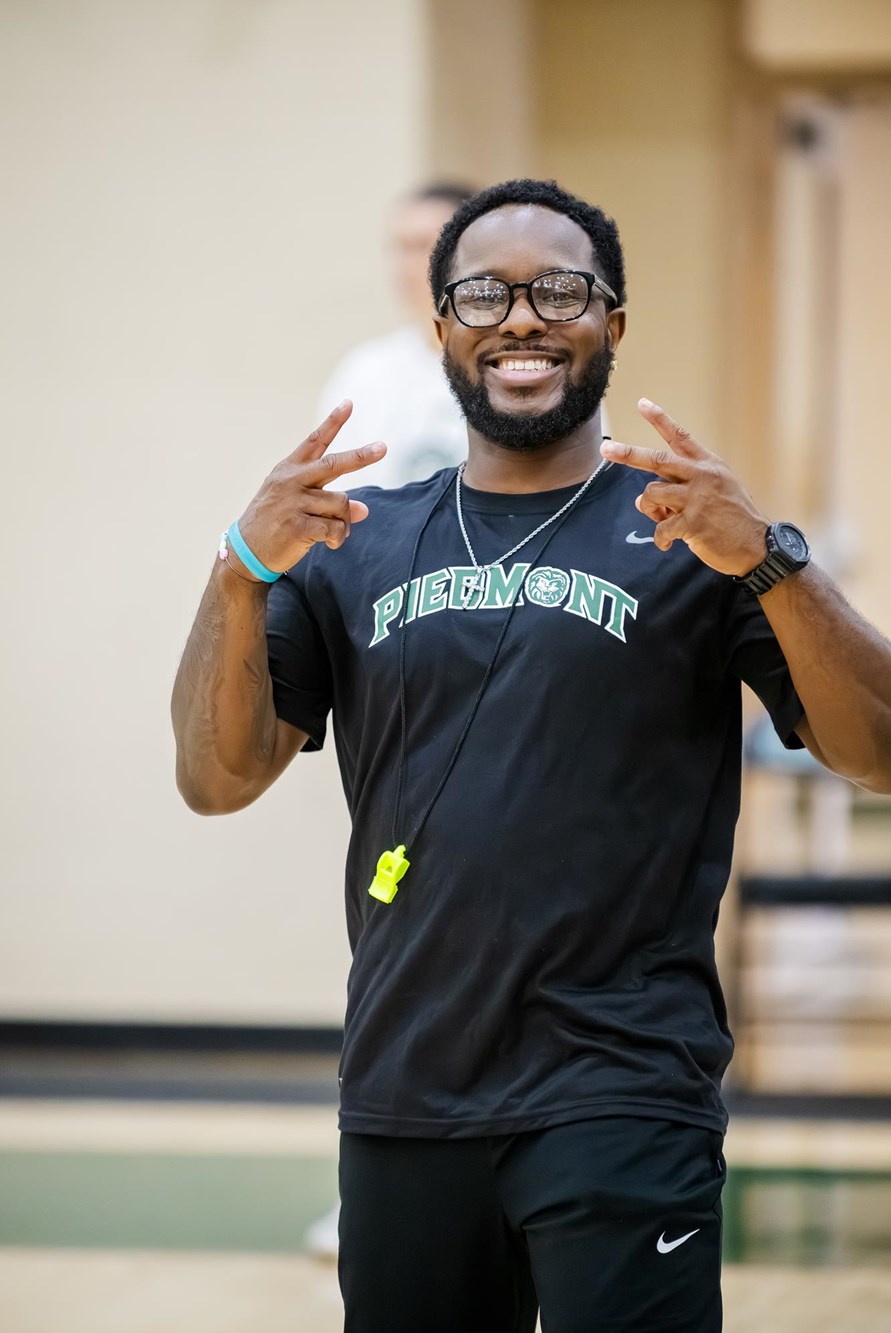
“Being able to relate and identify with the things Black student-athletes wrestle with and go through day-to-day on college campuses — and the things they deal with internally when they leave campus and go back to their hometowns.”
He speaks about mentorship not as a buzzword, but as responsibility.
“Having Black men and women of integrity and high character that student-athletes can confide in, who can lend a voice of reason or hold them accountable when they miss the mark — not coddle them and keep it real with them — is like having an auntie or uncle who looks out for them while they’re away.”
Black History Month, for him, is both educational and deeply personal.
“Every year I learn something different that I didn’t know that a Black man or woman invented, created, came up with,” he says.
His roots stretch wide — a father who immigrated from Trinidad at age seven, a mother from Brooklyn, New York, and his own upbringing in Atlanta, Georgia.
“It’s impossible not to be compassionate and proud of being Black and where you come from,” he says.
But at the center of his identity is something even deeper.
“In all the things I set my mind to do, I want to make sure people can see Jesus when they see me. I am proud of my blackness because that’s the way God made me — and I am made in His image.”
Coaching, he explains, is what he does. It is not who he is.
“My identity is rooted in Christ. Coaching is simply what I do.”
That grounding shapes his leadership: graceful accountability, servant leadership, being the light in the room.
When asked what he would tell young Black professionals aspiring to work in college athletics, he emphasizes connection, curiosity, and consistency.
“I got into the position I am in today off of the genuine relationships I made along the way.”
“In this life, no matter what profession you have,
who you know will get you in the door —
what you know will keep you in the room.”
He encourages young professionals to “Make genuine connections. Ask a lot of questions, because if you stop learning, you stop growing. Don’t be afraid to do the job nobody wants to do. Be present where you’re planted. The grass is greener where you water it.”
And his final piece of advice was:
“Work so hard that you make yourself undeniable. My father always taught me — you work for the job you want, not the job you currently have.”
In a profession defined by wins and losses, his impact is measured differently — in mentorship, in faith, in presence, in the steady example of what it means to lead with character.
Rooted in heritage. Rising in purpose.
And always, pointing back to something greater than the game.