ATLANTA, Ga. (April 10, 2026) - For fans, officiating is often defined by the moments they see – a whistle, a call, a decision made in real time.
For Mick Fiondella, the Coordinator of Men’s Basketball Officials of the Collegiate Conference of the South (CCS), those moments are the result of months of preparation, evaluation, and development that begin long before the season tips off.
“As Coordinator of Officials, it is my responsibility to train and educate our staff,” he said. “That starts in the summer with camps and continues throughout the year with communication around rules, mechanics, and expectations.”
Preparation at the collegiate level extends far beyond game day. Officials participate in film sessions that break down positioning, call selection, and sequencing, while also engaging in classroom-style instruction focused on communication, approachability, and court presence.
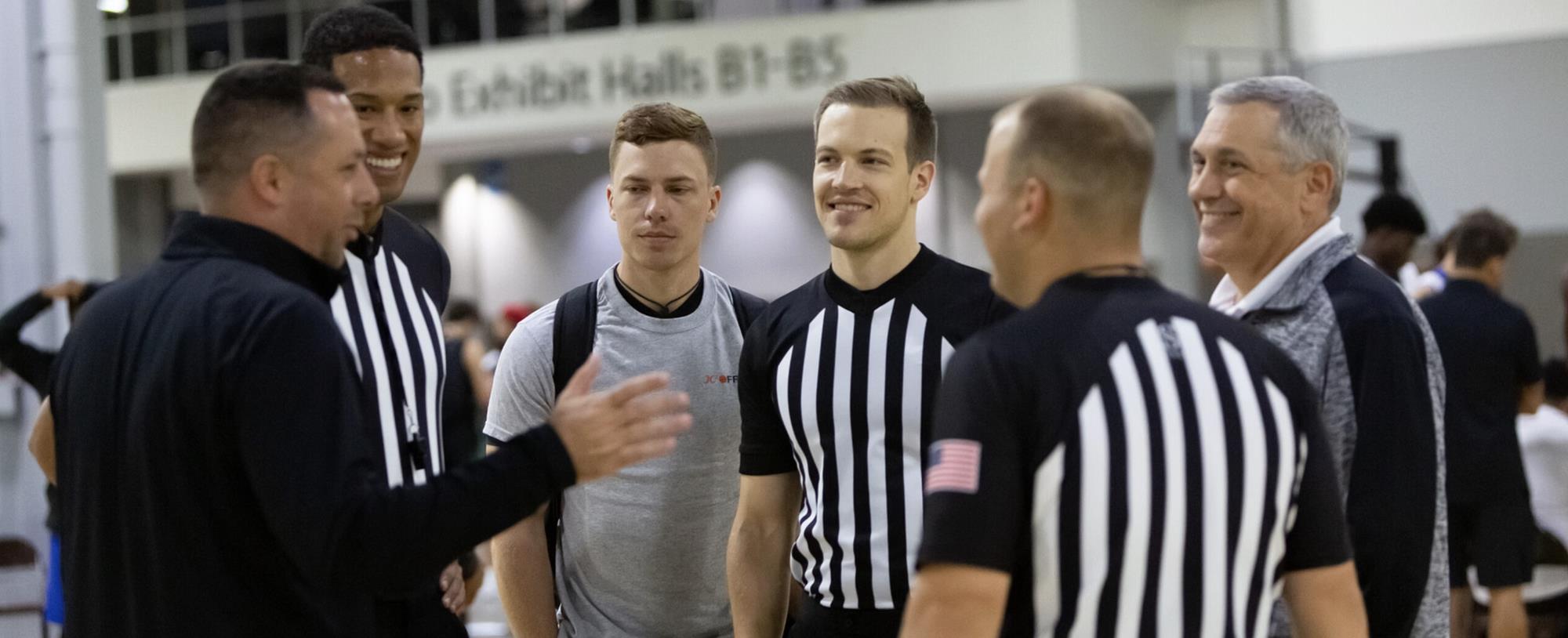
“Officials that succeed at the college level have a strong feel for the game and are great communicators,” he said.
“Being in the right position is critical, but understanding the situation and being able to communicate it with conviction is what separates strong officials. You also have to be willing to make the tough call in a big moment and not hesitate.”
That level of preparation and professionalism was on full display during a historic moment for the conference, when an all-women officiating crew took the floor during CCS men’s basketball regular season play.
While fans may be accustomed to seeing women officiate at the highest levels of the sport, the path to those opportunities is often less visible.
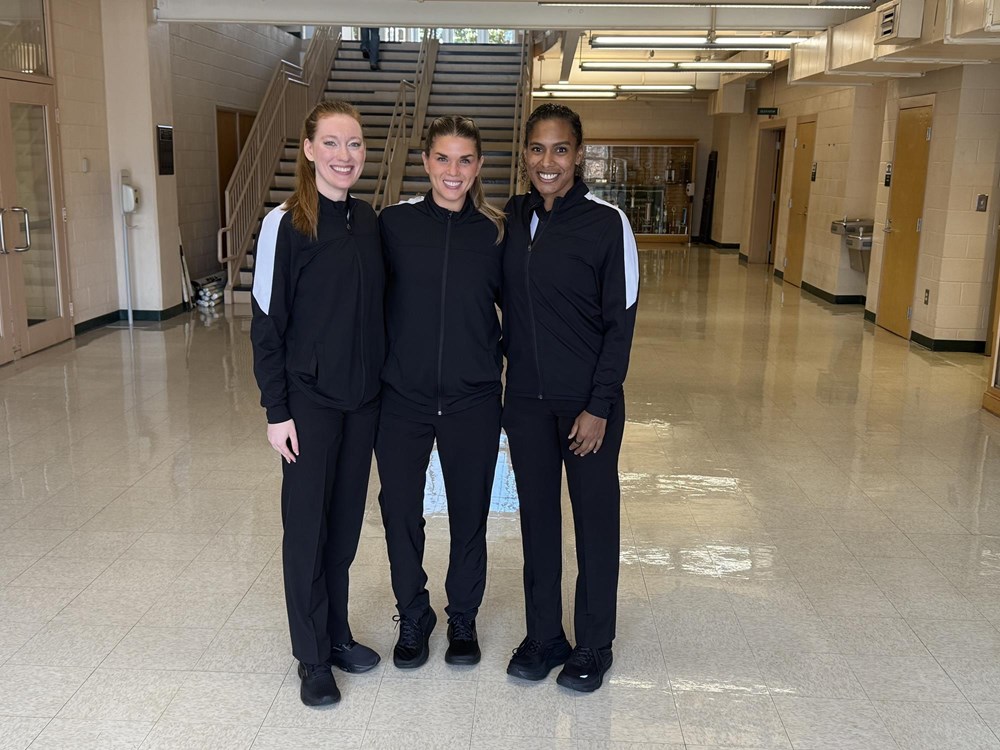 Pictured above (left to right): Elizabeth Glass, Sam Galloway (crew chief, middle) Leshay Bernstein
“I think a lot of fans see women officiating men’s games on television at the professional or Division I level, but they don’t always understand how those officials got there,” he said.
“This was an opportunity to show how professional and dedicated these women are to their craft.”
For the conference, the moment was both a point of pride and a reflection of its values.
“I was fortunate to have three of the best up-and-coming women’s officials working that game, so there was no doubt they would perform at a high level,” he said.
“From a conference standpoint, it was significant because we did it first. It shows that we are forward-thinking and intentional about creating opportunities.”
Beyond the conference, the impact of the moment extends to the future of the profession.
“For the sport, it’s about showing young women that this path exists,” he said. “If they want to pursue officiating, there are opportunities available to them.”
Those opportunities are grounded in a profession that often goes unnoticed when done well, but remains essential to the game.
“There’s a saying in officiating that if you leave the court and nobody noticed you, you did an outstanding job,” he said.
Still, the role of an official extends beyond managing the game – it contributes directly to the student-athlete experience.
“If we handle ourselves the right way, the hope is that student-athletes recognize that and respond with the same level of professionalism,” he said.
For those considering officiating—especially women—the message is simple.
“
Do it,” he said. “If you love the game and want to stay involved, this is a great way to do it.”
Officiating offers a unique perspective—one that keeps individuals close to the game while challenging them to grow in new ways.
“Only 13 people are on the court during a game – 10 players and three officials,” he said. “Why not have one of the best seats in the arena and still be part of the action?”
The pathway into officiating is accessible, with opportunities at every level—from youth and recreational leagues to high school, junior college, and beyond. With guidance, mentorship, and a willingness to learn, officials can continue to develop throughout their careers.
“There are so many opportunities out there. Find a mentor, be willing to work, and most importantly, have fun with it.”
For the Mick, that journey is one worth sharing.
“Anyone who is interested in getting started can reach out,” he added. “My contact information is available on the
CCS website.”
Because behind every whistle is more than a call—it’s preparation, purpose, and a commitment to the game.
And for those willing to step onto the court, it may just be the start of something more.
This feature is part of our series called Beyond the Game. This storytelling campaign is centered on highlighting the people, preparation, and professions that shape college athletics beyond the competition itself. This feature was distributed in celebration of Officials Appreciation Week.
ABOUT THE COLLEGIATE CONFERENCE OF THE SOUTH (CCS)
The CCS is an NCAA Division III athletic conference that began play during the 2022-23 academic year. The conference features nine member institutions (Agnes Scott College, Asbury University, Belhaven University, Covenant College, Huntingdon College, LaGrange College, Maryville College, Piedmont University, and Wesleyan College) and sponsors championships across 14 sports. In addition to sharing the member institutions' geographic identity, the name 'Collegiate Conference of the South' is indicative of a shared commitment to academic excellence, which is commensurate with the NCAA Division III philosophy.