ATLANTA, Ga. (September 12, 2026) - There are moments in an athlete’s life that divide everything into before and after.
For Asbury women’s basketball student-athlete, Grace Bale, it was the sound.
The pop. The burning sensation. The unmistakable feeling that something inside her knee had changed.
“The first time I tore my ACL playing basketball, I was at a loss for words,” Bale remembers. “It was one of those things where you just knew.”
What followed was not simply an injury. It was a disruption to the rhythm of a life built around movement.
“Everything after that moment was never going to be the same,” she says. “And that was one of the hardest things for me to overcome.”
For someone who had always been highly active, suddenly being forced to sit and watch was its own kind of challenge. Basketball had given her motion, routine, and freedom. Recovery demanded the opposite.
“Going from constantly moving and doing the things I loved to suddenly being forced to slow down was incredibly difficult.”
And that was only the beginning.
The Part No One Sees
An ACL recovery is easy to recognize from the outside.
There are crutches. Braces. Surgery. Physical therapy. Eventually, there are videos of first steps, first runs and returns to the court.
What is harder to see is everything that happens in between.
“Everyone on the outside sees the physical aspect of recovery, but they never truly understand how mentally draining and lonely the entire process can be,” she says.
Recovery required her to relearn movements that once happened without thought. Everyday tasks suddenly carried weight.
“The progress is slow, and there are so many days when you feel like you’re stuck in the same place, even though you’ve worked until you’re exhausted.”
People could see the surgery and the crutches.
“They don’t see the sleepless nights, countless hours spent alone doing exercises, fighting frustration, and wondering if you’ll ever feel like yourself again.”
And for her, that process did not happen once.
It happened three times.
After multiple ACL surgeries, rehabilitation became about more than rebuilding a knee. It became about rebuilding trust.
“You don’t just have to rebuild your knee; you must rebuild your confidence in your body,” she explains. “Trust it again, believe in it again, and eventually convince yourself that it won’t let you down.”
Strength Borrowed from Others
On the days when her own strength felt limited, there were people who helped carry it for her.
“My parents were my biggest supporters through every surgery and recovery,” she says. “There was never a moment when they weren’t there for me. On the days when I felt weak, discouraged, or like I couldn’t keep going, they were the ones who pushed me. They often reminded me that recovery wasn’t going to happen overnight and that I couldn’t give up just because it was hard.”
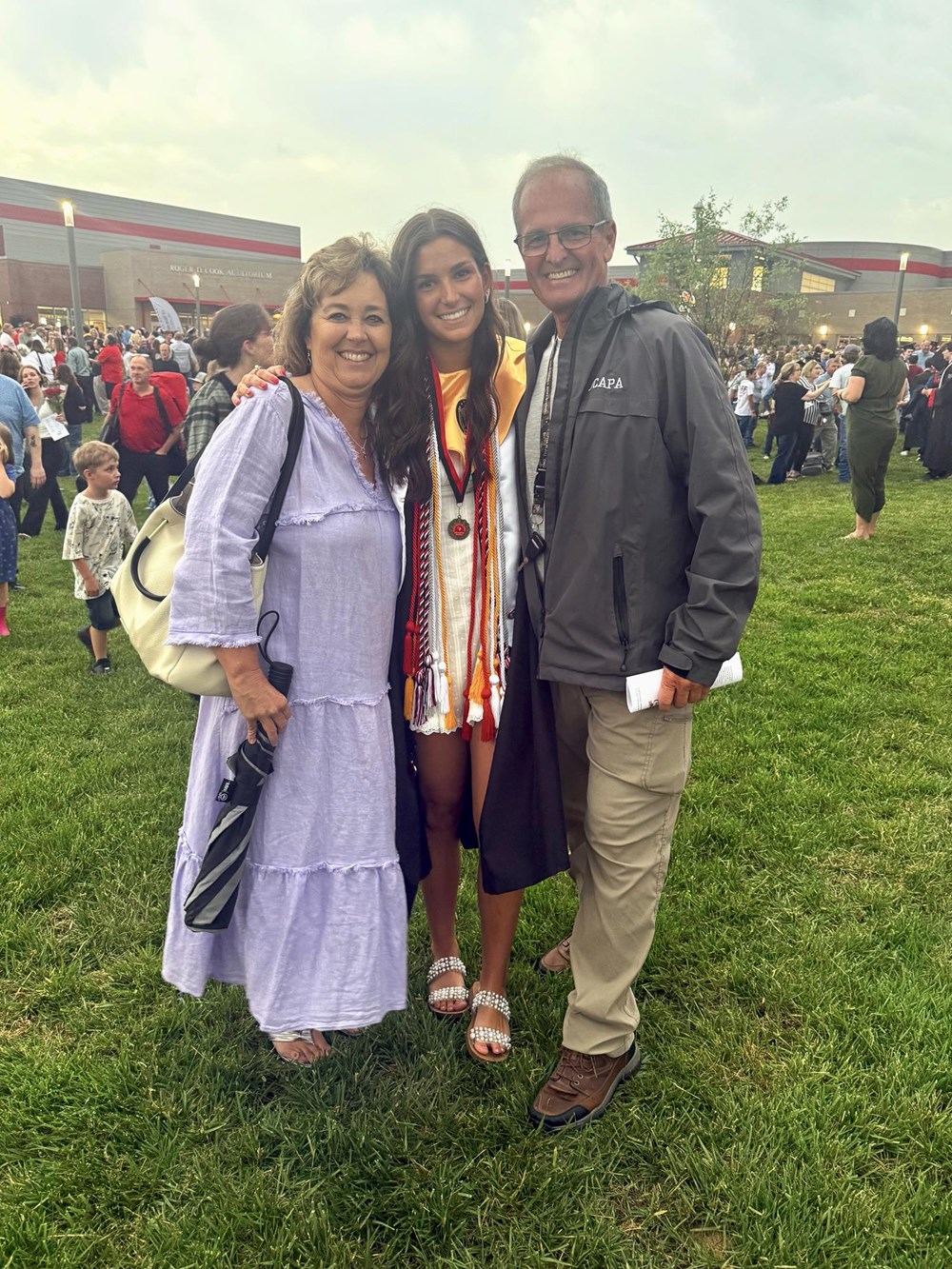
Their encouragement was accompanied by something even more foundational: faith.
Throughout each surgery and each rehabilitation process, one verse remained close.
Philippians 4:13: “I can do all things through Christ who strengthens me.”
“On some of the hardest days, my parents would simply remind me of that verse,” she says. “Those words became something I could hold onto when I felt like I had nothing left.”
What began as scripture became an anchor.
“My journey has taught me that even when the trials and tribulations seem impossible, I’m never facing them alone.”
Through her parents, her faith, and the strength she found in Christ, she kept moving.
Sometimes, literally, one step at a time.
Learning to Celebrate the Small Things
Before the injury, progress might have meant another basket, another win, or another improvement on the court.
Rehabilitation changed that definition entirely.
“In the beginning, progress meant noticing the smallest physical improvements,” she says.
A movement that had been impossible two weeks earlier suddenly became possible. Those moments taught her that progress does not always announce itself.
“Even if I couldn’t see the progress every day, I was still moving forward.”
Her milestones became deeply personal: taking the first steps without crutches, walking without a limp, learning how to naturally walk downstairs again, regaining full range of motion, running and eventually trusting her knee.
With time, however, the goal became bigger than physical strength.
“I realized progress isn’t just about becoming stronger physically,” she says. “It’s about slowly getting back the confidence and freedom that I had before the injury.”
Freedom meant moving without thinking about her knee.
It meant playing without fear. It meant trusting her body again.
And it meant learning that even the smallest victory deserved to be celebrated.
More Than an Athlete
Three ACL surgeries will teach you about your body.
For her, they also revealed something about who she was beyond it.
“After three ACL surgeries, I have learned some very important things about who I am beyond the title of an athlete.”

Patience was one of the first lessons.
Recovery refused to move on her preferred timeline. She had to learn to accept that meaningful progress could not be rushed.
“Every small improvement reminded me that meaningful progress takes time.”
Then came resilience.
“I discovered that I have more resilience than I ever realized.”
Surgery, rehabilitation, and the emotional challenge of starting over three separate times tested her in ways competition never could.
“Honestly, I wouldn’t change what I went through for the world,” she says. “These experiences have shaped me into the person I am today.”
This experience also reshaped her thoughts around gratitude.
Things once considered ordinary – walking pain-free, going downstairs, simply playing basketball – became gifts.
“When you lose the ability to do those things, you realize how much they mean,” she says. “Things that once seemed ordinary can become some of your biggest accomplishments.”
But perhaps the most important lesson was about her ability to keep going.
“I may not always be able to control what happens to me, but I can control how I respond.”
She kept showing up.
Even when showing up meant starting over.
“Getting knocked down doesn’t mean you have to stay down.”
Five Reminders for the Hard Days
When asked what carried her through recovery, and she named:
Celebrate the small things.
Find something to look forward to.
Stay positive.
Grow your relationship with Christ.
Philippians 4:13.
Each one came from experience.
Celebrating the small things helped her recognize progress when the finish line still felt far away.
Finding something outside of therapy gave her life room to be bigger than rehabilitation.
“Rehab can easily become your entire world,” she says. “Having something beyond the next visit to be excited about helped give me a sense of normalcy and reminded me that there was more to life than my injury.”
Positivity helped her look backward at how far she had come rather than constantly measuring how far she still had to go.
And faith reminded her that she did not have to carry everything herself.
“When I felt like I had nothing left to give, my faith gave me the strength to keep going.”
The Chapter, Not the Ending
Today, the encouragement she once needed is something she can now offer someone else.
To the student-athlete going through their own journey of recovery, she has a message.
“You are not defined by your injury.”
She knows the frustration. The exhaustion. The fear of missing out. The comparison that can come when someone else seems to be moving faster.
“Be patient with yourself and trust the process,” she says. “Your timeline will not look like someone else’s, and that’s okay.”
There will be difficult days.
“There will be days when you question whether it’s worth it or whether you can do it. You can, and it’s worth it.”
Her advice is to lean into the people who love you. Find joy outside of rehabilitation. Ask for help. Keep showing up.
And do not be afraid of hard things.
“This injury is only one chapter of your story, not the ending.”
For National Day of Encouragement, perhaps that is the message worth carrying.
Encouragement does not always make the difficult thing disappear. Sometimes, it simply gives us enough strength to take the next step.
Then another.
Then another.
Until one day, the person who wondered whether she would ever feel like herself again realizes she has become someone new.
Stronger. More patient. More grateful.
And able to look back at the road behind her and say:
“Your comeback will mean so much more because you’ll know exactly how hard you had to work for it. One day, you’ll look back and realize that the person you became through this journey is stronger than the person you were before.”